SEO In 2026: How AI Is Changing SEO in 2026
Search engine optimization is evolving faster than ever. Artificial intelligence is changing how people search, how search engines understand content, and how businesses attract organic traffic.
In SEO In 2026, businesses can no longer depend only on traditional keyword optimization and backlinks. Search engines are becoming more intelligent, while AI-powered search experiences are changing the way users discover information, products, and services.
To stay competitive, marketers need to understand how AI is influencing SEO and how they can adapt their strategies.
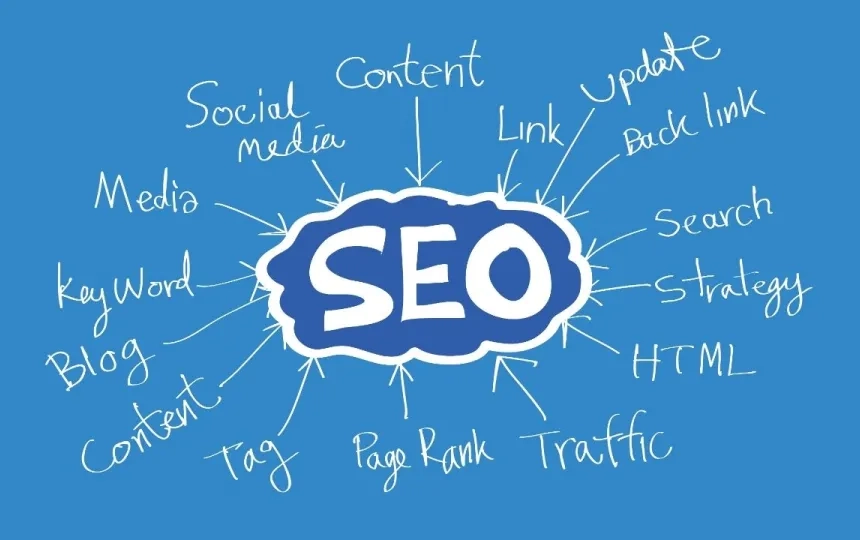
How AI Is Changing SEO In 2026
Artificial intelligence is influencing almost every part of modern search engine optimization. From content creation and keyword research to search intent analysis and technical optimization, AI can help marketers work faster and make better decisions.
However, AI does not mean that traditional SEO is dead. Instead, it is changing the way SEO is performed.
1. AI Is Changing Search Results
Search engines are increasingly using AI to understand the meaning behind a user’s search instead of simply matching keywords.
For example, when someone searches for “best digital marketing agency for a small business,” search engines can analyze the user’s intent, location, context, and related concepts to provide more relevant results.
This means websites need to focus on search intent, topical relevance, and useful information rather than simply repeating keywords.
2. AI Is Transforming Keyword Research
Traditional keyword research focused heavily on search volume, keyword difficulty, and CPC.
AI-powered tools can go further by identifying:
- Search intent
- Related topics
- Semantic keywords
- Long-tail queries
- Content gaps
- User questions
- Topic clusters
- Competitor content opportunities
Instead of creating separate articles for every small keyword variation, businesses can build comprehensive content around a main topic and cover related questions naturally.
3. AI Is Making Content Creation Faster
AI tools can help SEO professionals generate content ideas, create outlines, summarize information, identify FAQs, and improve existing content.
But simply publishing AI-generated content is not enough.
Successful SEO content still needs:
- Original insights
- Accurate information
- Real examples
- Expert experience
- Clear explanations
- Strong search intent alignment
- Useful information for readers
The goal should be to use AI as an assistant rather than a replacement for human expertise.
4. Search Intent Is Becoming More Important
One of the biggest changes in modern SEO is the increasing importance of understanding what users actually want.
A keyword can have different meanings depending on the context.
For example, someone searching for “SEO course” could be looking for:
- An online course
- A classroom course
- Course fees
- Course duration
- Certification
- Reviews
- Career opportunities
Businesses that understand these different intents can create content that answers the user’s actual questions.
5. AI Is Increasing the Importance of Topical Authority
Search engines are becoming better at understanding relationships between topics.
Instead of publishing one article about SEO, a website can build topical authority by covering multiple connected subjects.
For example, an SEO website could create content around:
- Keyword research
- On-page SEO
- Technical SEO
- Local SEO
- Link building
- SEO analytics
- Content optimization
- AI SEO
- Google Search Console
- SEO audits
This creates a stronger content ecosystem and helps search engines understand the website’s expertise.
6. AI Can Improve Technical SEO
AI can also help identify technical problems that may affect website performance.
SEO professionals can use AI-assisted tools to analyze issues such as:
- Broken links
- Duplicate content
- Missing metadata
- Internal linking opportunities
- Crawlability problems
- Website structure
- Content gaps
- Schema opportunities
However, technical recommendations should always be reviewed before implementation.
7. AI Search Is Changing How Users Discover Brands
Users are increasingly interacting with AI-powered search experiences rather than relying exclusively on traditional search result pages.
This creates a new challenge for businesses: being visible when users ask AI systems for recommendations or answers.
Brands should therefore focus on creating content that clearly demonstrates expertise, provides useful information, and establishes credibility.
8. Human Expertise Still Matters
AI can process enormous amounts of information, but it does not automatically make content valuable.
Human experience can provide:
- Original opinions
- Case studies
- Practical examples
- First-hand knowledge
- Unique perspectives
- Industry expertise
This is why businesses should combine AI efficiency with human creativity and expertise.
The strongest strategy is not AI vs humans. It is AI + human expertise.
9. How Businesses Should Adapt Their SEO Strategy
Businesses that want to succeed with SEO In 2026 should update their strategies around quality, relevance, and user experience.
A modern SEO strategy should include:
Create Helpful Content
Focus on solving real customer problems instead of creating content only to rank for keywords.
Build Topic Clusters
Create multiple interconnected pieces of content around important topics related to your business.
Optimize for Search Intent
Understand whether users are looking for information, comparisons, products, services, or solutions.
Strengthen Internal Linking
Connect related pages so users and search engines can easily discover important content.
Use AI Responsibly
Use AI for research, ideation, analysis, and optimization, but review and improve the output with human expertise.
Track SEO Performance
Monitor organic traffic, rankings, impressions, clicks, conversions, and engagement to understand what is working.
10. The Future of SEO
The future of SEO will likely involve a combination of traditional search optimization, AI-powered search, content quality, brand authority, and user experience.
Businesses should not focus only on ranking for individual keywords. They should aim to become a trusted source of information within their industry.
This means creating useful content consistently, understanding customers, demonstrating expertise, and adapting to changes in search technology.
Conclusion
AI is not replacing SEO. It is changing how SEO is performed.
From keyword research and content creation to search intent, technical optimization, and AI-powered search experiences, artificial intelligence is becoming an important part of modern digital marketing.
For businesses, the key is to adapt rather than resist the change. By combining AI tools with human expertise, high-quality content, strong technical SEO, and a user-first approach, brands can build a stronger organic presence.
In SEO In 2026, the businesses that succeed will be those that understand both search engines and their users.
The future of SEO is not about creating more content. It is about creating better, more useful, and more trustworthy content.